
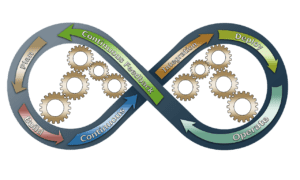

Most teams chase traffic and discount codes, then wonder why margin falls. Ecommerce conversion rate optimisation fixes the leaks. If visitors cannot find what they want or do not trust the offer, they leave. That wastes ad spend and keeps stock in your warehouse. The fix is not a redesign. Small changes shipped weekly move revenue fast. Here is a practical system you can run this quarter.
Ecommerce conversion rate optimisation framework
You do not need thousands of ideas. You need a simple conversion rate optimisation framework that prioritises what blocks buying, then proves the fix. This is a CRO framework for ecommerce built for busy teams. It covers methodology, strategy, tactics, KPIs, and a short maturity model you can self assess against. This is your ecommerce CRO methodology in one place.
Methodology that finds the money
- Define the drop. Start with conversion funnel analysis ecommerce. Find the biggest step change, not the loudest opinion.
- See what shoppers see. Use heatmaps and session replays, on site polls, and user feedback surveys to capture friction.
- Quantify it. Pull Google Analytics metrics for affected segments, devices and pages. Look for bounce rate reduction opportunities and oddities like high add to basket with low basket to checkout rate.
- Write the bet. Turn problems into testable statements. Tie each to one primary conversion metric and one audience.
- Prove it. Run A/B testing for ecommerce on high impact templates first. Stop guessing.
- Ship it. Bake winning changes into code and design systems so fixes stick. Use session replay analysis to confirm the behaviour changed.
- Guard rails. Add error rate monitoring during releases so you do not confuse a code fault with a test win.
Approach that puts customers first
- Map the path to purchase. Use user journey mapping ecommerce to capture intent, questions and blockers at each stage.
- Reduce effort. Prioritise user experience optimisation on navigation, search and filters. Form field reduction pays every time. A category with 300 filters is like a supermarket with the signs removed.
- Nudge, do not nag. Use clear calls to action near decisions. Show delivery dates visibility, returns and total cost before the basket, not after.
- Speed equals trust. Improve mobile page load speed ecommerce. Shoppers compare you to the fastest site they used today.
Conversion rate optimisation strategy
- Set one commercial aim. For example, improve ecommerce conversion rates on mobile PDPs by 15% in 90 days.
- Score work. Impact, confidence, effort. Fixes that unblock checkout beat cosmetic tweaks. This is your ecommerce CRO methodology in motion.
- Sequence tests. Test top templates, then scale patterns. Templates win because they touch more revenue.
- Measure meaningful numbers. Define conversion rate optimisation KPIs that ladder to revenue, such as checkout starts, payment success rate, purchases per session, and average order value.
Conversion rate optimisation tactics that pay
- Make choices easy. Tighten product titles, primary images and price clarity. Use social proof that is specific and recent.
- Cut cognitive load. Fewer form fields, better defaults, and inline validation. This is practical checkout process optimisation and ecommerce checkout process optimisation.
- Kill surprises. Show delivery dates, duties and returns earlier. You will reduce cart abandonment more than any exit pop up.
- Design for thumb reach. Primary actions sit where thumbs rest. That is how you get clear calls to action clicked.
- Reduce friction scripts. Hide coupon boxes behind a link. Offer one tap wallets. Remove forced account creation at checkout.
KPIs and metrics that matter
- Primary conversion. Purchases per session by device and channel.
- Journey health. PDP to basket rate, basket to checkout rate, and payment success. These beat a blunt overall conversion rate.
- Speed and stability. Time to interactive, error rate monitoring, and outage minutes during peaks.
- Cost and value. Blended CAC, contribution margin, and units per order. Optimise for profit, not just clicks.
Track with dashboards that group by page type and device. Use annotations for major releases and campaigns so you can tie changes to moves in the graph.
Simple maturity model
- Ad hoc. Sporadic tests, no log, no owner.
- Emerging. Backlog, prioritisation, basic QA, some wins.
- Systematic. Library of patterns, shared metrics, weekly cadence.
- Integrated. CRO in product roadmap, design system, and engineering standards. This is where compounding gains start.
Putting it together this quarter
- Week 1. Baseline with conversion funnel analysis and Google Analytics metrics. Draft three tests tied to one revenue goal. Include at least one focused on checkout optimisation ecommerce.
- Week 2. Ship two UX fixes for fast bounce rate reduction. Address mobile page load speed ecommerce and delivery dates visibility.
- Week 3–4. Run the test. If it wins, roll out. If not, learn and iterate. Keep the conversion rate optimisation tactics that removed friction. Measure the impact on the primary conversion metric and purchases per session.
Follow this system and your ecommerce CRO best practices stop being theory. You will have a working conversion rate optimisation framework, a live backlog, and wins that compound. Keep going. That is the only real best practice.